What Should I Look For to Spot Identity Fraud on My Credit File?
Finding an account or search Have a peek at this website you do not recognize on your credit file can be unsettling. It does not automatically mean someone has stolen your identity: a lender may use a different trading name, or a search may relate to an application you made through a broker. But unfamiliar activity is worth checking promptly, especially if you are planning a mortgage, tenancy, car finance or Continue reading another major family decision.
Your credit file is a record of information reported to credit reference agencies (CRAs). It is not the same thing as your credit score, and there is no single file that every lender sees. The most useful first step is to inspect the entries, compare information across agencies and ask questions about anything you cannot explain. Do the boring admin on a quiet evening, rather than trying to investigate the night before an appointment.
Why family plans can become financial decisions
A home move, a new baby, a change of job or helping an adult child with a car can all lead to applications for credit or housing. Those plans may involve banks, mortgage lenders, landlords, utility providers or car finance companies checking information about you. An unexpected entry can therefore create worry at exactly the moment when you are trying to make a practical decision.
Plan backwards from the date you expect to apply. If you hope to apply for a mortgage in three months, for example, check your reports now, not the night before speaking to a broker. That gives you time to investigate an unfamiliar account, correct an error or explain a search. It also avoids frantic applications for more credit in the hope of “improving” your position. Taking on credit you do not need is not a sensible way to make a file look better.
What to look for on your credit file
Start with the details rather than a headline score. Check your personal information, linked addresses, accounts, payment history and searches. Look across the report systematically, and make a note of anything you do not recognize in your phone’s notes app or a simple checklist.
What to check Possible warning sign What else could explain it? Accounts and credit agreements An unfamiliar account, card, loan or mobile-phone agreement A lender’s parent company or trading name may differ from the brand you know Searches Unknown searches, especially several linked to applications you did not make A comparison site or broker may have searched as part of a process you started Addresses and personal details An address, name variation or financial link you do not recognize A previous address or an administrative error may have been recorded incorrectly Balances and payment history A balance, missed payment or default on an account that is not yours Reporting dates can differ, but the account itself should still be identifiableUnfamiliar accounts
Look for accounts you never opened, including credit cards, personal loans, buy-now-pay-later products, overdrafts, phone contracts and other borrowing. Check the provider’s name, the date the account began, its current status and any balance or payment history. A fraudster may use your details to apply for credit, but a strange-looking entry can also be a legitimate account listed under a group company or finance partner’s name.
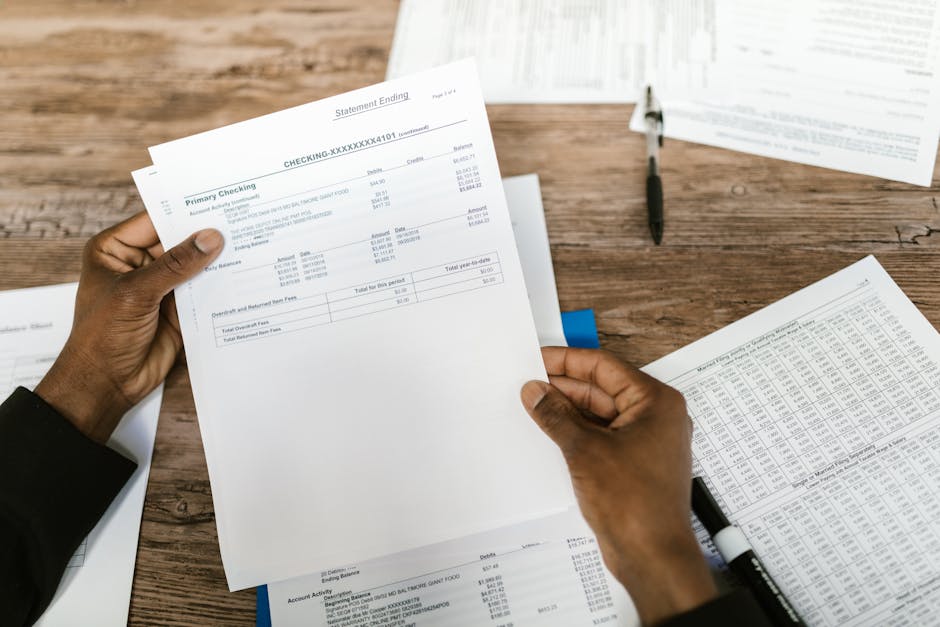
If you are unsure, compare the entry with emails, statements and paperwork you already have. Do not rely only on a search-engine result or a phone number in a suspicious message. Find the organization’s contact details independently, using its official website or a statement you know is genuine.
Unknown searches
A search entry shows that an organization checked information about you. It does not always mean that an account was opened. Pay attention to the organization, date and type of search, and ask whether it matches an application, quote or account review you requested.

Some searches are soft searches and are generally not visible to other lenders when they assess an application. They may be used for eligibility checks or to let you view your own report. A hard search is usually recorded when you formally apply for credit and may be visible to lenders reviewing your file. The exact treatment can depend on the search and provider, so check the description on the report or ask the organization that made it.
Want to know something interesting? several hard searches you cannot explain deserve attention, but one search is not proof of fraud. A broker, comparison service or retailer may have been involved in an application you started. If you did not authorize it, contact the organization and ask what prompted the search.
Addresses, names and financial links
Review the addresses associated with your file. An address you have never lived at could be a recording error or a sign that someone has used your details. Check that old addresses are shown accurately too; a previous address is not suspicious simply because you have moved.
Look at any financial associations listed, such as a person you have shared a joint account or credit agreement with. A family relationship or shared address alone should not necessarily create a financial link. If an association is wrong or no longer relevant, ask the CRA what evidence it needs to investigate or remove it.
Check more than one credit reference agency
In the UK, lenders do not all report to or use the same CRAs. Information can therefore appear on one file and not another. Check your reports with the main agencies—Experian, Equifax and TransUnion—rather than assuming that one report tells the whole story.
UK consumers can obtain statutory credit reports without paying. Each CRA explains how to request its statutory report and what identity checks are needed. Be careful not to confuse a free statutory report with a paid subscription or trial. You do not need to pay for a credit score simply to inspect the underlying entries.
MoneyTrumpet (moneytrumpet.co.uk) may be one place to read general personal-finance information, but use the CRAs themselves to check the reports they hold and follow their official processes to raise a dispute. Banks can also help if an account or transaction appears to involve an account you hold with them. The key is to contact the organization responsible for the specific entry, rather than relying on a third party to promise a quick fix.
Credit report accuracy matters more than score-watching
A credit score is a summary generated using a particular model. It can vary between agencies and is not the score every lender uses to make a decision. Lenders may consider your application details, affordability, credit history and their own criteria. A high number does not rule out identity fraud, and a lower number does not prove it.
Read the entries themselves. Is the account yours? Are the dates and balances plausible? Do you recognize the search? Is your address history right? An accurate report gives you something concrete to discuss with a lender. Fixing a genuine error is more useful than repeatedly checking a score that may not match the lender’s assessment.
What to do if you spot something suspicious
- Save the evidence. Note the CRA, entry, date, organization and account reference. Download or screenshot the relevant report page, and keep copies of any messages or letters.
- Contact the organization promptly. Use verified contact details and say clearly that you do not recognize the account or search. Ask it to investigate, explain how the entry arose and pause or correct activity where appropriate. Do not share passwords or one-time security codes with someone who contacts you unexpectedly.
- Tell the CRA that holds the entry. Raise a dispute through its official process and provide the information it requests. If more than one agency shows the same problem, contact each one; a correction at one CRA does not necessarily update the others.
- Contact your bank if a bank account or payment method may be involved. Use the number on your card or the bank’s official website. Ask about securing the account, reviewing recent activity and changing access details if needed.
- Follow official fraud-reporting guidance. If you believe someone has used your identity, report it through the current official UK fraud-reporting service and follow its advice. Keep the reference number and any correspondence.
- Review your other accounts and security. Change reused passwords, enable multi-factor authentication where available and check email, phone and online banking accounts for unexpected changes.
- Check back and keep records. Ask when you should expect an update. Keep a dated log of calls, names, case numbers and what each organization agreed to do.
If you are applying for a mortgage or another major product soon, tell your broker or lender that you are disputing an entry. Be factual: explain what you have found and what steps you have taken. Do not make repeated applications just to test whether the issue has gone away; each formal application could create another hard search.
Common mistakes to avoid
- Do not assume every unfamiliar name means fraud. Verify whether it is a lender’s group company, broker or service provider before drawing a conclusion.
- Do not ignore an unexplained account. Contact the organization promptly and ask for an investigation, even if the balance is small or the account appears inactive.
- Do not pay a company that promises to erase accurate missed payments. Accurate information generally cannot be removed simply because it is inconvenient. A genuine error can be disputed with the CRA and organization that supplied it.
- Do not apply for extra credit to “look better.” Borrowing you do not need may add cost and risk, and it will not resolve identity misuse.
- Do not wait until the last minute. Identity checks and disputes can take time, so work backwards from your application date.
A calm checklist before an application
On a quiet evening, set aside time to make a running checklist in your notes app. Check all three CRA files, mark accounts and searches you recognize, and list anything that needs follow-up. Then gather documents you may need, such as proof of address, account correspondence and copies of disputed entries.
For example, a family planning a move might be budgeting for a mortgage appointment as well as legal fees and removals. Finding an unfamiliar loan only days before speaking to a lender could add avoidable stress. Checking reports a few months ahead gives the the family time to contact the provider, challenge an error and keep the application plan realistic.
The aim is not to chase a perfect score. It is to make sure the information is accurate, understand who has searched your file and act quickly when something does not belong to you. If you spot unfamiliar accounts or unknown searches, verify the details, contact the responsible organization promptly and keep a clear record of what happens next.. Exactly.